
Why we dry-lay every tile floor before thinset.
A dry-lay is the sketch before the drawing. We set the pattern on the floor with spacers, walk the room, look at it with the lights on and the lights off — and then we change it.
What a dry-lay is
Before thinset goes down, we tile the whole floor — loose, on the subfloor, with spacers. Every cut is made for real. Every grout joint is set. The bathroom is playable, just not permanent. It takes half a day.
Then we walk the room. Morning light, evening light, overhead light off. We stand where the sink will stand. We sit on the toilet. We look at what ends at the threshold, what ends under the vanity toe-kick, what lines up with the shower curb.
What we look for
- Cut placement. A sliver at a doorway is a bad cut. We move the field so the cut lands under the vanity instead.
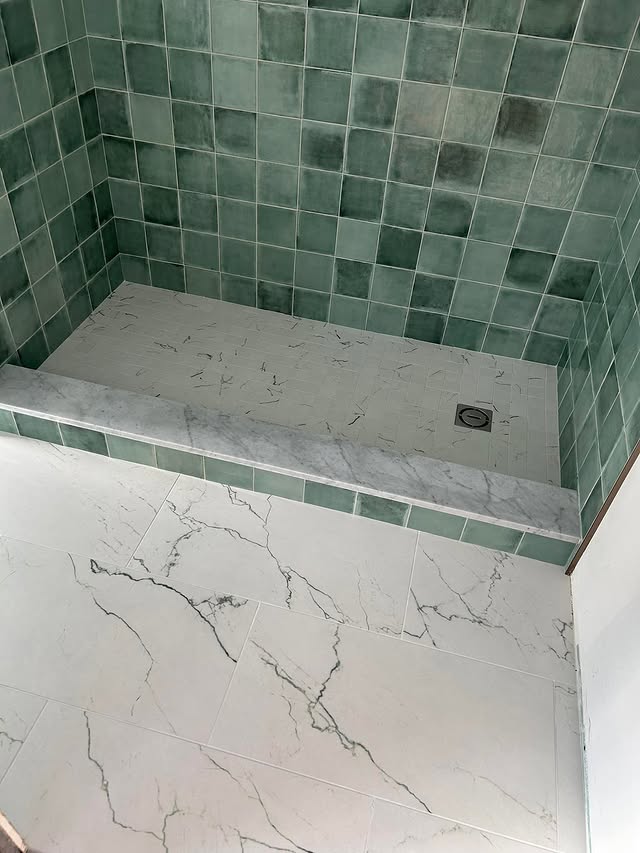
- Grout-line alignment. The shower threshold should meet a grout line, not a tile face. If it doesn’t, we shift the whole grid.
- Pattern centering. A 12×24 rectified floor wants its first full tile to start on the longest sight line, not on the wall the installer entered through.
- Vein-matching on stone. If it’s marble, we dry-lay two or three boxes at once and swap pieces until the veins read as a pattern, not as noise.
The floor is going to be there for twenty years. Half a day of walking it is the cheapest twenty-year decision on the job.
Why installers resist it
A dry-lay adds a half day to a bathroom. Installers paid by the square foot don’t love it. We pay our tile work by the job, on a drawing, and the drawing includes the dry-lay. It’s not negotiable on our sheets.
The other resistance is ego — experienced setters will tell you they can eyeball it. Sometimes they can. But they can also lay down a five-hundred-dollar slab and wish they had moved it two inches to the left. We would rather move it two inches to the left on the subfloor, for free, than look at the wrong version every morning for the rest of our ownership.
When we skip it
Never.